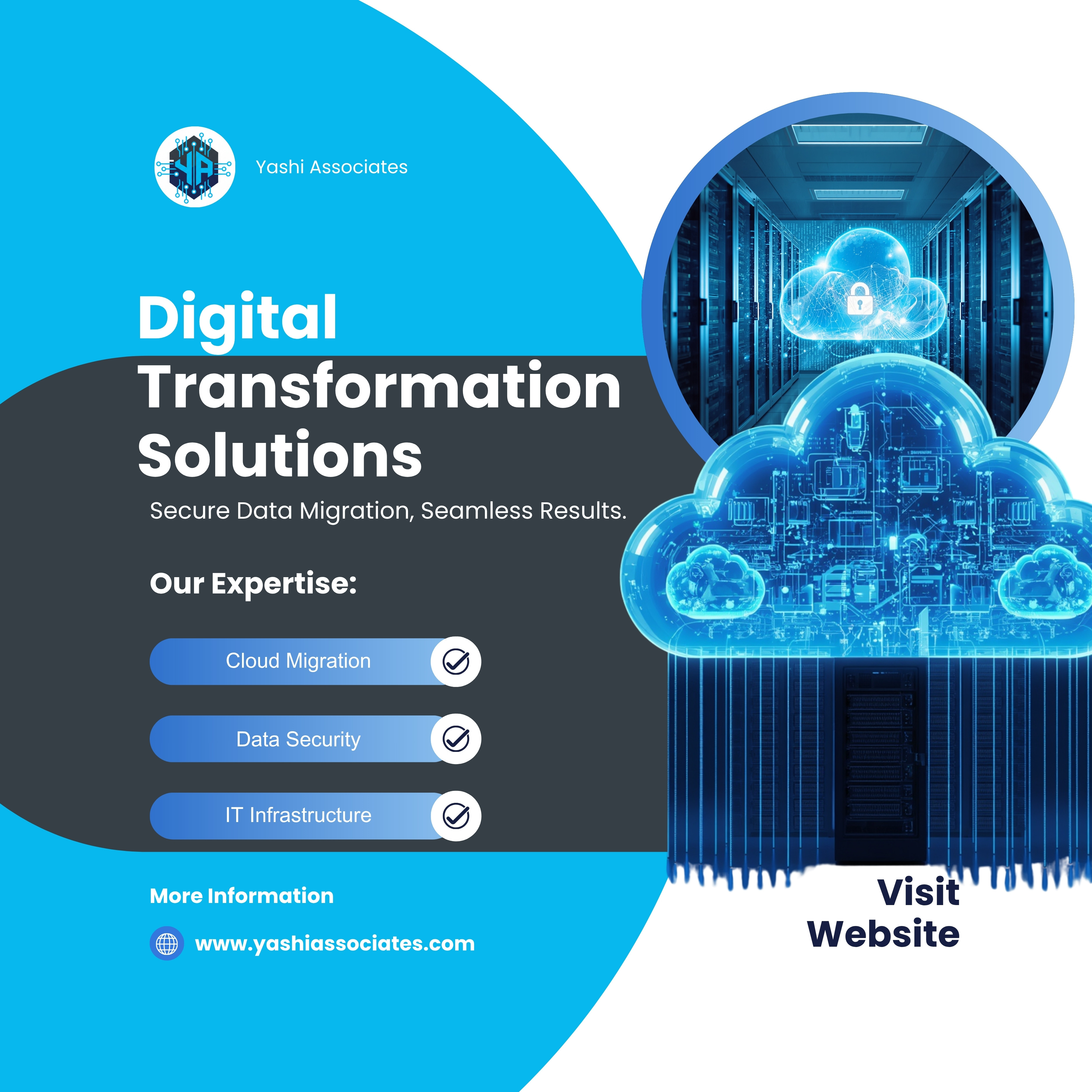
Why Cloud Migration is Important for Businesses in 2026: A Complete In-Depth Guide
Over the last decade, the foundation of enterprise operations has shifted dramatically. Historically, companies relied heavily on physical servers, localized storage, and extensive in-house IT teams to maintain their infrastructure. While that model served its purpose, it now generates technical debt and operational bottlenecks rather than competitive advantages.
Today’s enterprise landscape demands speed, flexibility, uncompromising security, and global accessibility.
Traditional systems simply cannot keep up with these modular requirements. Cloud migration has transitioned from a technical upgrade to a core strategic imperative. For businesses aiming to scale efficiently and ensure continuous uptime, Yashi Associates engineers the bridge between legacy infrastructure and highly available, resilient cloud ecosystems.
What is Cloud Migration?
Cloud migration extends beyond mere data transfer; it is the comprehensive architectural transformation of your IT ecosystem.
It encompasses:
-
Moving legacy databases to highly available cloud servers.
-
Migrating monolithic applications into scalable cloud environments.
-
Reconfiguring systems for load balancing and optimized performance.
-
Integrating modern, cloud-native tools and CI/CD pipelines.
Migration strategies vary based on business objectives and technical constraints:
-
Lift & Shift: Moving existing applications to the cloud with minimal architectural changes.
-
Replatforming: Applying targeted optimizations to leverage specific cloud capabilities without a complete rewrite.
-
Refactoring: Completely rebuilding applications using clean architecture and cloud-native principles for maximum scalability.
5 Reasons Cloud Migration is Critical in 2026
1. Scalability Without Infrastructure Limits
The most significant bottleneck of traditional hardware is finite scalability. Physical setups require predicting future demand, purchasing expensive hardware in advance, and over-provisioning resources that sit idle during off-peak times.
With a properly architected cloud deployment:
-
Resources scale automatically to handle unpredictable traffic spikes.
-
Systems maintain stability without catastrophic crashes during high loads.
-
You avoid sunk costs in depreciating hardware.
2. Ruthless Cost Optimization
On-premise IT infrastructure carries substantial hidden and recurring costs, including hardware procurement, continuous maintenance, power consumption, and emergency repairs.
Cloud computing introduces a streamlined, operational expenditure (OpEx) model:
-
Zero upfront capital investment for hardware.
-
Elimination of physical maintenance burdens.
-
Predictable, usage-based billing.
By leveraging expert procurement and cloud support from Yashi Associates, enterprises typically reduce total IT expenditures by 20–40% while dramatically improving service delivery.
3. Enterprise-Grade Security & Disaster Recovery
Protecting sensitive data is the primary concern for any modern business. Legacy systems are highly vulnerable to physical hardware failure, sophisticated cyber threats, and inadequate backup protocols.
Modern cloud platforms enforce security through design, offering:
-
End-to-end encryption for data at rest and in transit.
-
Identity and Access Management (IAM) with multi-factor authentication.
-
Real-time threat detection and automated patch management.
-
Geographically distributed backups to ensure complete disaster recovery.
Even in the event of a localized failure, your data remains secure and accessible, guaranteeing business continuity.
4. Seamless Remote Accessibility & Collaboration
The modern workforce operates beyond physical office boundaries. Teams require secure, synchronized access to enterprise tools from any location and device. Traditional LAN-restricted systems create severe operational friction.
Cloud architecture resolves this by:
-
Providing secure, zero-trust access from anywhere in the world.
-
Enabling real-time, simultaneous collaboration on shared datasets.
-
Accelerating decision-making processes across distributed teams.
5. High Availability & Peak Performance
System latency directly impacts user experience, employee productivity, and ultimately, revenue.
Cloud infrastructure guarantees:
-
High-speed processing backed by modern hardware.
-
Intelligent load balancing to distribute traffic evenly.
-
Strict Service Level Agreements (SLAs) often guaranteeing 99.9% uptime.
Faster systems result in optimized workflows, higher conversion rates, and superior client satisfaction.
The Hidden Risks of Delaying Migration
Enterprises that hesitate to modernize their infrastructure accumulate significant technical debt, leading to:
-
Operational Inefficiency: Manual processes and isolated systems drastically slow down workflows.
-
Escalating Costs: Maintaining outdated, out-of-warranty hardware becomes increasingly expensive.
-
Security Vulnerabilities: Legacy systems lacking modern security patches are primary targets for ransomware and data breaches.
-
Competitive Disadvantage: Competitors leveraging cloud-native agility will consistently outperform you in speed to market and customer service.
How Yashi Associates Delivers Cloud Excellence
Executing a seamless cloud migration requires deep engineering expertise. A poorly planned migration can result in data corruption, extended downtime, and security gaps. As an ISO-certified IT partner, Yashi Associates ensures a flawless transition through a meticulous, engineering-first approach:
-
Assessment & System Architecture: We audit your existing infrastructure to design a robust, clean architectural blueprint tailored to your workloads.
-
Custom Implementation: Utilizing our 13+ years of enterprise IT expertise, we execute migrations precisely aligned with your operational goals.
-
Zero-Compromise Security: Data is transitioned using secure, encrypted pipelines to ensure total integrity.
-
24/7 Managed Cloud Support: Our continuous monitoring and proactive maintenance guarantee 99.9% uptime post-migration.
Secure Your Digital Future
Cloud migration is no longer a future roadmap item—it is an immediate operational necessity. Enterprises that adapt early scale faster, operate more intelligently, and secure their data against modern threats.
Ready to modernize your infrastructure? Partner with an established, government-recognized MSME trusted by over 500 companies.